
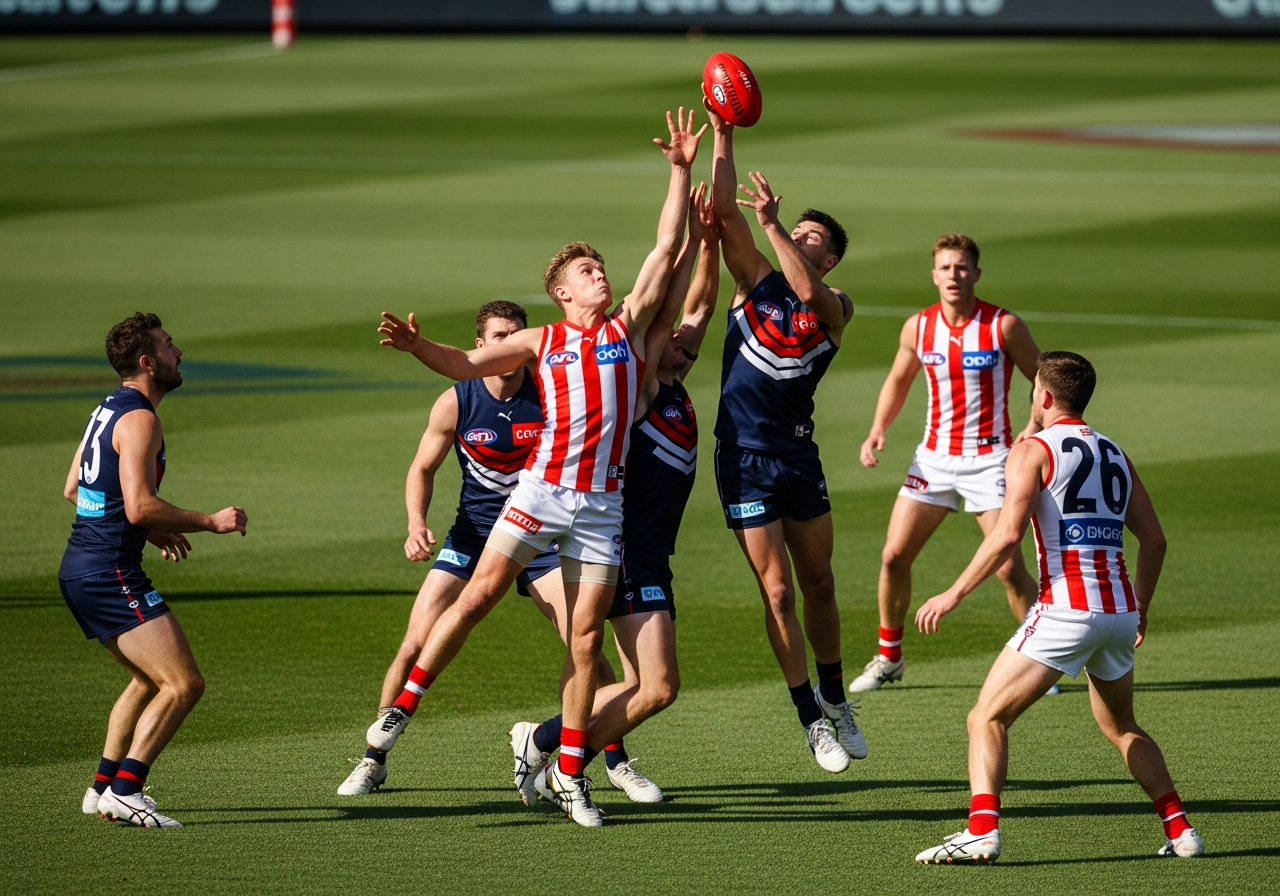
Australian Rules Football quarter betting represents one of the most intricate and strategically rewarding betting markets available to AFL punters. Quarter betting encompasses individual quarter results, progressive quarter outcomes, and specialised markets like first team to score in each quarter, highest scoring quarter, and Wire to Wire quarter progressions. These markets require precise understanding of how scores are calculated and reset between quarters, particularly for second half and fourth quarter betting where scores return to 0-0 at the designated starting point.
Settlement timing varies significantly between regular season matches and finals, with extra time considerations fundamentally altering quarter market outcomes during September action. Dead heat rules apply when quarters end with identical scores and no draw option exists, while draw handling differs across operators and specific market types. Understanding these settlement nuances proves essential for successful quarter betting strategies and accurate payout expectations.
Quarter Betting Basics and Settlement Timing
Quarter betting differs fundamentally from full-match betting through its segmented approach to AFL scoring and timing. While full-match betting considers the cumulative four-quarter result, quarter betting focuses on individual quarter outcomes with specific start and end points for scoring calculations. This creates unique settlement scenarios where a team losing the overall match can still win multiple individual quarters, providing diverse betting opportunities throughout the game’s duration.
Settlement timing becomes critical when distinguishing between regular season and finals matches, as extra time provisions directly impact quarter market calculations. Regular season matches conclude after four quarters regardless of the final margin, while finals matches may extend beyond regulation time if scores remain level. These timing differences affect not only when bets settle but also which scores count toward quarter-specific markets.
The complexity increases when considering how quarter betting markets handle score resets and progressive calculations. Second half betting markets reset scores to 0-0 at the half-time break, while fourth quarter betting begins from a 0-0 baseline regardless of cumulative match scores. Understanding these reset mechanics proves essential for accurate quarter betting decisions and settlement expectations.
Major operators maintain consistency in basic quarter betting principles while differing in specific settlement edge cases and dead heat applications. Betfair and Sportsbet provide the most comprehensive quarter settlement rules with explicit dead heat clarifications, while other operators may require reference to general dead heat policies for quarter-specific scenarios.
Regular Season vs Finals Settlement
Regular season home and away matches follow straightforward settlement procedures with quarter markets closing after regulation time regardless of final margins. Finals matches introduce complexity through potential extra time periods that may or may not be included in quarter market calculations depending on the specific bet type and operator rules.
The distinction becomes crucial for quarter-specific markets where extra time inclusion can dramatically alter outcomes. Some operators include extra time in fourth quarter calculations for finals matches, while others settle quarter markets on regulation time only. This variation requires careful review of operator-specific rules before placing finals quarter bets.
| Match Type | Settlement Timing | Extra Time Included | Draw Handling |
|---|---|---|---|
| Regular Season | After 4 quarters | Not applicable | Dead heat rule applies |
| Finals (regulation) | After 4 quarters | Quarter markets: No | Dead heat rule applies |
| Finals (extra time) | After extra periods | Full match only | No draw possible |
| Grand Final | After extra periods | Operator dependent | Dead heat if level quarters |
Quarter Scoring and Score Resets
Second half and fourth quarter betting markets operate on reset scoring systems where the scoreboard returns to 0-0 at the designated starting point. Second half betting considers only goals and behinds scored from the half-time break onwards, ignoring first and second quarter contributions to the cumulative match score. Similarly, fourth quarter betting markets focus exclusively on scoring during the final quarter period.
Extra time inclusion varies by operator and market type, with most quarter-specific markets settling on regulation quarter results only. This means extra time periods in finals matches typically do not affect individual quarter betting outcomes, though full-match markets naturally include all scoring periods. Clarification of these rules proves essential before placing quarter bets on finals matches where extra time remains possible.
Draw Rules and Dead Heat Settlements
Draw options and dead heat rule applications create distinct settlement scenarios across AFL quarter betting markets. Draw options appear consistently in certain quarter markets where equal scoring represents a legitimate outcome, while dead heat rules apply when tied results occur without specific draw betting options available. Understanding when each rule applies prevents settlement confusion and enables accurate payout calculations.
Dead heat rule calculations become essential when multiple selections tie for quarter betting outcomes without draw options provided. The AFL Grand Final presents unique dead heat scenarios where quarter markets may settle at half face value when teams score identically in specific quarters. Regular season matches follow similar dead heat principles when quarter scores finish level and no draw option was offered to punters.
Quarter markets demonstrate varying approaches to draw handling, with some operators consistently offering draw options while others rely primarily on dead heat rules for tied outcomes. These differences impact both available betting options and potential payout structures when quarter scores finish level.
Settlement timing for dead heat calculations follows completion of the relevant quarter period, with official AFL statistics determining final quarter scores for payout purposes. Disputes regarding quarter scores reference AFL.com.au as the authoritative source across all major operators.
- Dead heat rules apply when quarter scores tie without available draw option
- Payout calculations settle at half face value for tied quarter selections
- Draw options offered consistently in margin betting and some quarter markets
- AFL Grand Final follows dead heat rules for tied quarter outcomes
- Official AFL statistics determine all quarter settlement disputes
- Settlement occurs after quarter completion regardless of match continuation
Dead Heat Rule Application
Dead heat rules for AFL quarter betting apply when teams score identical points in any quarter period without a draw option being offered by the operator. The calculation divides winning stake and returns by the number of tied selections, typically resulting in half face value payouts when two teams tie for highest quarter score. This rule proves particularly relevant for highest scoring quarter markets and quarter winner betting without draw options.
AFL Grand Final quarter markets follow standard dead heat procedures when teams score identically in any quarter period. The rule applies regardless of overall match outcome, meaning quarter dead heats can occur even when one team wins the Grand Final convincingly. Operators maintain consistency in dead heat calculations across regular season and finals matches.
Payout calculations under dead heat rules divide the full winning return by the number of tied selections, with punters receiving their original stake plus the reduced profit margin. For example, a $100 bet at 3.00 odds in a dead heat situation returns $100 stake plus $100 profit (rather than $200 profit), totaling $200 instead of the full $300 potential return.
Draw Options in Quarter Markets
Quarter markets consistently offer draw options in margin betting and certain specialized quarter markets where tied outcomes represent significant possibilities. These markets explicitly include draw as a third option alongside the competing teams, providing direct betting opportunities on level quarter scores.
When draws occur in quarters where draw options were offered, settlement follows standard procedures with draw bets winning at the quoted odds. This differs from dead heat scenarios where no draw option existed, creating clear distinction between intentional draw markets and unexpected tied outcomes requiring dead heat calculations.
First Goal Scorer Markets and Settlement
First goal scorer markets encompass game-wide, first quarter, and specific quarter variations with distinct settlement rules governing player eligibility and refund conditions. These markets require players to be named in the starting 22 for eligibility, with substitute players generally excluded from first goal scorer betting options. Settlement occurs when the designated goal is scored, regardless of subsequent match events or player performance.
Player eligibility varies between operators regarding substitute and late inclusion handling, with some maintaining bets on players who become unavailable while others provide refunds for non-participants. Starting 22 confirmations typically occur 90 minutes before scheduled match start, establishing final eligibility for first goal scorer markets across all operators.
Specific quarter first goal scorer markets operate independently of overall match first goal outcomes, creating multiple betting opportunities throughout each game. First quarter first goal scorer markets settle when any player scores the opening goal of the match, while subsequent quarter markets focus on the first scoring play of the designated quarter period.
Settlement disputes reference official AFL goal umpire decisions as recorded in match statistics, with video review outcomes potentially affecting post-match settlement adjustments. Operators generally accept AFL official scoring decisions for all first goal scorer market settlements, including any post-match corrections or revisions.
| Market Type | Eligibility Requirements | Settlement Condition | Refund Trigger |
|---|---|---|---|
| Match First Goal | Starting 22 only | First goal scored in match | Player not selected |
| First Quarter Goal | Starting 22 only | First goal in first quarter | No goals in quarter |
| Second Quarter Goal | Field players eligible | First goal in second quarter | No goals in quarter |
| Third Quarter Goal | Field players eligible | First goal in third quarter | No goals in quarter |
| Fourth Quarter Goal | Field players eligible | First goal in fourth quarter | No goals in quarter |
Player Eligibility and Refund Conditions
Starting 22 players maintain eligibility for first goal scorer markets provided they take the field during the relevant quarter period, while substitute players face varying eligibility rules across operators. Some operators exclude substitutes entirely from first goal scorer options, while others allow substitute player betting with specific settlement conditions applying when substitutes enter the game during relevant periods.
Late player withdrawals trigger different refund policies depending on timing and operator rules, with most providing full refunds when selected players fail to take the field. Medical substitutes activated before bounce-down generally result in refunds for the replaced player and continued betting availability on the substitute if they were listed as a betting option.
- Starting 22 confirmation required for first goal scorer eligibility
- Substitute players excluded from most first goal scorer markets
- Late withdrawals result in automatic bet refunds
- Medical substitutes trigger refunds for replaced players
- Quarter-specific markets require field presence during relevant period
- Post-match goal reassignments affect settlement outcomes
Highest Scoring Quarter and Wire to Wire Markets
Highest scoring quarter markets settle based on total points scored by both teams during each quarter period, with dead heat rules applying when two or more quarters produce identical combined scores. These markets require careful calculation of quarter-specific scoring rather than cumulative match totals, creating scenarios where early quarters may outscore later periods despite progressive scoreboard displays showing higher numbers.
Wire to Wire quarter markets track team leadership at each quarter break, requiring teams to lead after every quarter period to win Wire to Wire bets. These markets demonstrate complexity when teams exchange leads during quarters while maintaining quarter-break advantages, distinguishing between in-quarter momentum and quarter-end positioning for settlement purposes.
Settlement calculations for highest scoring quarter markets consider only scoring within each quarter period, with first quarter scoring calculated from 0-0, second quarter from first quarter conclusion, and so forth. This segmented approach creates opportunities for lower-scoring quarters to win highest scoring markets when high-scoring games produce uneven quarter distributions.
Any Other Result options in Wire to Wire markets win when no team leads after every quarter break, including scenarios where teams are level at any quarter break or where lead changes occur. These markets provide value opportunities when teams appear closely matched or when weather conditions suggest low-scoring affairs with multiple lead changes.
Equal Quarter Scores and Dead Heat Application
Quarter markets void completely when all four quarters produce identical combined point totals, a rare occurrence that eliminates highest scoring quarter betting outcomes entirely. More commonly, dead heat rules apply when two or three quarters tie for highest combined scoring, dividing payouts among the tied quarter selections according to standard dead heat calculations.
Dead heat scenarios in highest scoring quarter markets follow half face value payout rules when two quarters tie, or one-third face value when three quarters produce equal scores. These calculations consider the full potential payout divided by the number of tied outcomes, maintaining proportional returns for successful selections.
Voiding occurs only in the exceptional circumstance where all quarters produce identical totals, requiring exact point matches across four separate quarter periods. This outcome triggers complete market voiding with full stake refunds, distinguishing it from partial dead heat scenarios affecting specific quarter selections.
Wire to Wire Quarter Results
Wire to Wire markets require continuous team leadership at each quarter break throughout the match, with level scores at any quarter break typically resulting in Any Other Result settlement. Teams must lead after first quarter, second quarter, third quarter, and full-time to satisfy Wire to Wire betting requirements.
Any Other Result settlement covers all scenarios where Wire to Wire conditions are not met, including teams that lead at most but not all quarter breaks, matches with level quarter break scores, and games where different teams lead at different quarter breaks. This option frequently provides value in closely contested matches where sustained leadership proves difficult to maintain.
Half-Time and Full-Time Settlement Rules
Half-time and full-time combination markets require specific outcomes at both the half-time break and final siren, creating four possible winning combinations for each match. These markets settle based on match position at exactly half-time and full-time, with any subsequent scoring or time adjustments not affecting HT/FT market outcomes once these specific time points pass.
Team to Win Both Halves markets demand separate victories in first half and second half periods, calculated independently rather than cumulatively. First half results consider scoring from match start to half-time break, while second half results calculate from half-time break to final siren, creating potential scenarios where teams win both halves but lose the overall match due to margin differences.
Settlement occurs immediately upon full-time confirmation, with half-time results already determined and second half calculations completed at the final siren. These markets reference official AFL timekeeping and scoring for precise half-time and full-time position confirmation.
Draw outcomes in either half affect Both Halves market settlement significantly, typically resulting in losing outcomes for Both Halves selections when any half finishes level. The requirement for outright victories in both halves creates higher odds and increased difficulty compared to simple match winner betting.
- HT/FT markets require specific outcomes at both half-time and full-time
- Settlement occurs immediately upon final siren confirmation
- Both Halves markets demand separate wins in each half period
- Draw in either half typically eliminates Both Halves winning chances
- Second half calculations reset from 0-0 at half-time break
- Official AFL timekeeping determines exact settlement points
- Post-siren scores do not affect HT/FT market outcomes
First and Second Half Scoring Requirements
Team to Win Both Halves requires outright victories in both the first half (start to half-time) and second half (half-time to final siren) periods, with scoring calculated independently for each half. Teams must outscore opponents in both periods separately, creating scenarios where substantial first half leads can be insufficient if second half performances are poor.
Draw consequences in either half eliminate Both Halves winning possibilities for both teams, typically resulting in market voiding or Any Other Result payouts depending on operator rules and market structure. Level scores at half-time immediately eliminate both teams from Both Halves consideration regardless of second half outcomes.
Second half scoring resets to 0-0 at the half-time break for calculation purposes, meaning teams trailing at half-time can still win the second half by outscoring opponents from that point forward. This creates strategic betting opportunities where strong finishing teams face poor starting teams, potentially winning second halves despite overall match defeats.
Line and Margin Betting Settlement
Line and margin betting in AFL quarter markets operates on point spread principles where teams must win by specified margins or stay within designated point ranges for successful outcomes. Quarter line betting applies handicap systems to individual quarter results, while margin betting focuses on exact victory margins at quarter completion. These markets consistently offer draw options given the significant possibility of teams finishing quarters with identical scores.
Quarter line and total doubles settlement requires both individual quarter outcomes to succeed for winning payouts, combining quarter line results with total points scored in the same quarter period. These combination markets increase potential returns while requiring accuracy in both margin prediction and scoring volume estimation for successful outcomes.
Settlement occurs immediately upon quarter completion with official AFL scoring determining exact margins and total points for line and margin market resolution. Extra time does not affect quarter-specific line and margin markets, with settlement based on regulation quarter results regardless of subsequent match extensions in finals scenarios.
Margin betting markets typically offer multiple point range options covering various victory scenarios plus draw outcomes, providing comprehensive coverage of possible quarter results. Draw options in margin betting win when teams finish quarters with identical scores, distinguishing these markets from line betting where half-point spreads eliminate draw possibilities.
| Bet Type | Settlement Basis | Extra Time Treatment | Draw Option |
|---|---|---|---|
| Quarter Line | Individual quarter margin | Not included | Only with whole numbers |
| Quarter Margin | Exact quarter margin | Not included | Always offered |
| Line/Total Double | Combined quarter outcome | Not included | Depends on line structure |
| Match Margin | Final match margin | Included in finals | Always offered |
| Half Margin | Half-time margin only | Not applicable | Always offered |
Quarter Line and Total Doubles
Quarter line and total doubles combine point spread outcomes with scoring volume predictions for individual quarters, requiring both components to succeed for winning payouts. These markets demand accurate prediction of both quarter margin and total quarter points, creating higher-odds opportunities with correspondingly increased difficulty.
Settlement occurs on individual quarter results with no consideration of subsequent quarter outcomes or overall match results. Quarter totals calculate combined team scoring within the designated quarter period, while quarter lines apply handicap systems to determine winning teams after point adjustments.
Winning Margin at Match Completion
Margin betting calculates final victory margins after all quarters are completed, including extra time in finals matches where applicable. These markets offer multiple margin ranges covering various victory scenarios plus draw options for level results after regulation time.
Draw option settlement in margin betting occurs when matches finish level after regulation time in regular season games, while finals margin betting may extend through extra time periods until a winner emerges. Understanding these distinctions proves crucial for margin betting strategy across different match types and situations.
Abandoned and Postponed Match Settlement
Abandoned and postponed match settlement follows specific timeframe rules governing when bets remain valid versus when complete voiding occurs. The standard seven-day rule maintains bet validity when matches are rescheduled and completed within seven days of the original scheduled start time, preserving all quarter betting markets and selections for the eventual completion date.
Single bet and multibet handling differs significantly for abandoned matches, with single bets typically remaining valid during the seven-day window while multibets may face immediate voiding depending on operator policies and specific market combinations. Quarter betting markets generally maintain validity provided the match completes within the designated timeframe regardless of venue or schedule changes.
Match abandonment after quarter completion creates partial settlement scenarios where completed quarters settle normally while incomplete quarters face voiding procedures. These situations require careful analysis of which quarter markets completed before abandonment and which remain subject to voiding or rescheduling rules.
Weather-related postponements and venue changes do not affect bet validity provided matches complete within seven days, maintaining all original quarter betting selections and odds. COVID-related postponements follow similar rules with extended timeframes sometimes applied depending on circumstances and operator discretion.
- Matches rescheduled within seven days maintain all bet validity
- Quarter markets completed before abandonment settle normally
- Incomplete quarters face voiding after seven-day expiry
- Venue changes do not affect bet validity or settlement rules
- COVID postponements may receive extended validity periods
Seven-Day Rescheduling and Bet Voiding
Bets remain valid and settle normally when abandoned or postponed matches are rescheduled and completed within seven days of the original start time, regardless of venue changes or other logistical adjustments. This seven-day rule applies to all quarter betting markets including first goal scorer, highest scoring quarter, and Wire to Wire markets, maintaining original selections and odds for the eventual match completion.
Voiding procedures activate after the seven-day window expires without match completion, resulting in full stake refunds for all quarter betting markets associated with the abandoned match. Single bets receive immediate refunds while multibets typically continue with adjusted odds reflecting the removed selection, though this varies by operator policy.
Partial completion scenarios where some quarters finish before abandonment create mixed settlement outcomes with completed quarters settling normally while incomplete markets face voiding or carry-over to the rescheduled completion attempt. Understanding these nuances helps clarify potential outcomes when matches face weather or other interruptions during quarter periods.
Spread Betting and In-Play Quarter Markets
Spread betting mechanics for AFL quarter markets operate on point-based profit and loss calculations where returns fluctuate based on the margin by which predictions exceed or fall short of actual outcomes. Quarter spread markets offer dynamic pricing throughout matches with opportunities to open and close positions as quarter results develop, creating sophisticated trading opportunities beyond traditional fixed-odds betting approaches.
In-play quarter market settlement provides real-time opportunities to capitalize on changing match dynamics and momentum shifts during individual quarter periods. These markets adjust spreads and totals continuously based on current quarter scoring and time remaining, allowing experienced punters to trade positions as quarter outcomes become clearer.
Profit and loss calculations in spread betting multiply the difference between spread and actual result by the stake per point, creating unlimited profit potential alongside corresponding unlimited loss exposure. Quarter spread markets typically offer buy and sell options around predicted margins and totals, with settlement occurring immediately upon quarter completion.
Dynamic pricing adjustments reflect real-time quarter scoring and time factors, with spreads widening or narrowing based on current quarter performance and remaining time. Major operators like Spreadex emphasize these spread betting mechanics while others focus primarily on fixed odds quarter markets with limited in-play spread options.
| Market Type | Settlement Method | Profit/Loss Calculation | In-Play Availability |
|---|---|---|---|
| Quarter Margin Spread | Points above/below spread | Difference × stake per point | Throughout quarter |
| Quarter Total Spread | Total points vs spread | Difference × stake per point | Throughout quarter |
| Progressive Quarter | Cumulative performance | Multi-quarter calculation | Between quarters |
| Live Quarter Index | Real-time quarter performance | Dynamic spread movement | Continuous trading |
Dynamic In-Play Quarter Adjustments
In-play quarter betting allows position opening and closing throughout quarter periods with spreads adjusting continuously based on current scoring and time remaining. These dynamic markets enable sophisticated trading strategies where punters can capitalize on momentum shifts and scoring patterns as quarters develop, moving beyond simple pre-match position taking.
Spread differences between pre-match and in-play quarter markets reflect real-time information advantages and reduced uncertainty as quarters progress toward completion. Early quarter periods typically show wider spreads reflecting greater uncertainty, while late quarter periods feature tighter spreads as outcomes become more predictable based on current scoring rates and time constraints.